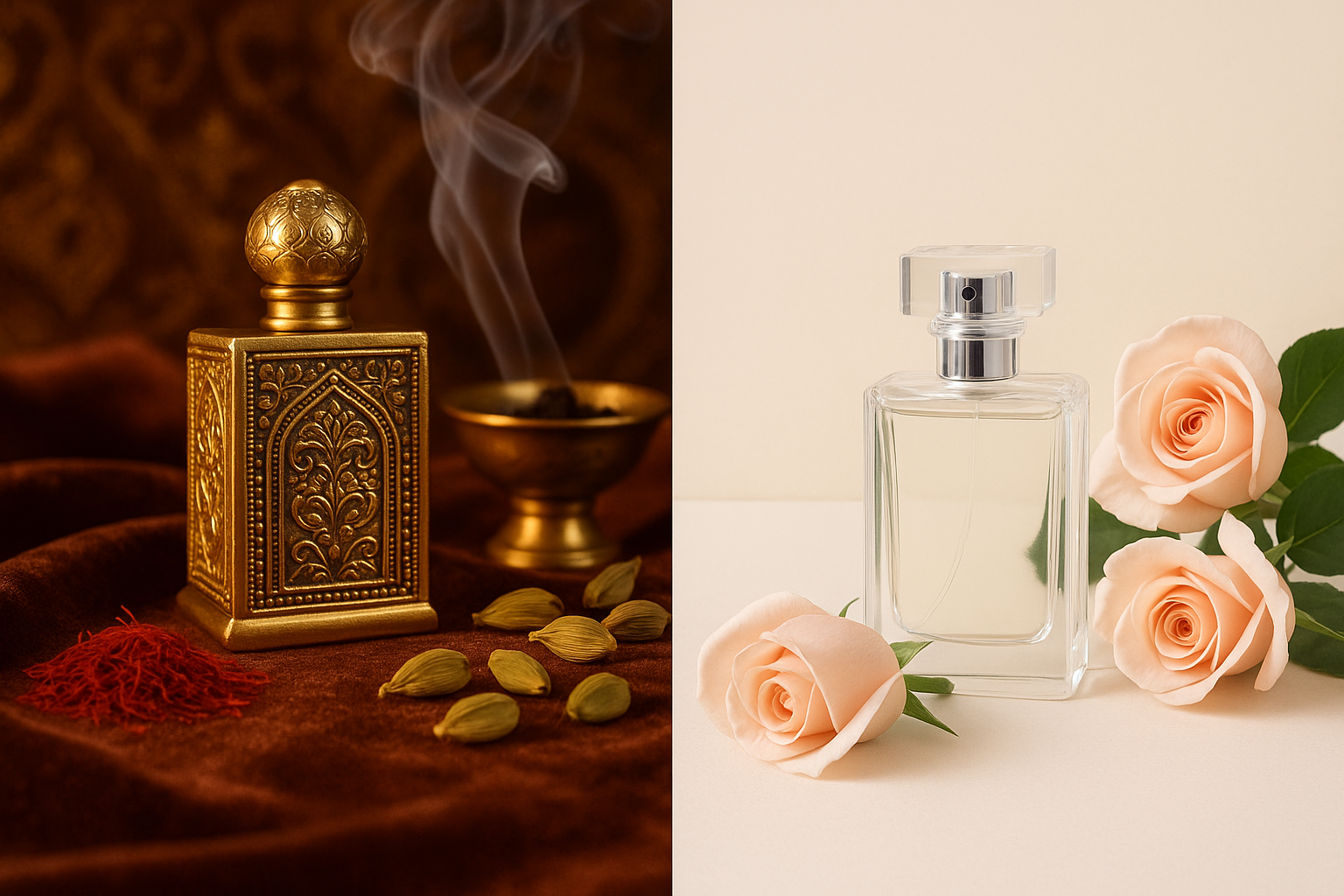
Arabic Perfume vs. Western Perfume: What’s the Difference?
Perfume is a universal language, but the way it’s crafted and worn varies greatly across cultures. Arabic perfumes and Western perfumes differ in ingredients, longevity, intensity, and even application styles. Whether you prefer the deep, woody richness of an Arabic fragrance or the light, fresh notes of a Western scent, understanding these differences can help you choose the perfect perfume for any occasion.
1. Ingredients & Composition
Arabic Perfume (Oud & Musk Dominance)
- Base: Heavy on oud (agarwood), musk, amber, and spices like saffron and cardamom.
- Nature: Often derived from natural resins, woods, and animalic notes (like deer musk).
- Scent Profile: Warm, smoky, leathery, and long-lasting.
Western Perfume (Floral & Citrus Focus)
- Base: Typically features floral (rose, jasmine), citrus (bergamot, lemon), and fresh aquatic notes.
- Nature: More synthetic and alcohol-based for a lighter, airy feel.
- Scent Profile: Crisp, sweet, or powdery, often designed for daytime wear.
2. Longevity & Sillage
| Feature | Arabic Perfume | Western Perfume |
|---|---|---|
| Longevity | 12+ hours (oil-based) | 4-8 hours (alcohol-based) |
| Sillage (Trail) | Strong, bold projection | Moderate, subtle diffusion |
| Best For | Evening wear, special occasions | Daytime, office-friendly |
💡 Why? Arabic perfumes use attars (oil-based) that cling to the skin, while Western perfumes rely on alcohol evaporation, making them fade faster.
3. Cultural Significance & Usage
Arabic Perfume Tradition
- Used in religious ceremonies, weddings, and daily wear in Middle Eastern cultures.
- Layering scents is common—oud is often paired with bakhoor (incense) for a richer experience.
- Gifting perfumes is a sign of respect and hospitality.
Western Perfume Trends
- Designed for individual expression—light florals for spring, vanilla for winter.
- Seasonal trends dominate (e.g., fresh citrus for summer, warm vanilla for holidays).
- Often marketed as a luxury accessory (e.g., Chanel No. 5, Dior Sauvage).
4. Application Techniques
Arabic Perfume:
- Dab, don’t spray (oil-based attars are applied on pulse points).
- Used with bakhoor (burning incense to enhance the scent).
- Less is more—a drop lasts all day.
Western Perfume:
- Spray on clothes & skin (alcohol helps disperse the scent).
- Reapplication needed after a few hours.
- Layering with body lotion can enhance longevity.
5. Which One Should You Choose Arabic Perfume vs. Western Perfume?
✔ Pick Arabic Perfume If…
- You love bold, exotic, long-lasting scents.
- You prefer natural, oil-based fragrances.
- You want a luxurious, mysterious aura.
✔ Pick Western Perfume If…
- You enjoy light, fresh, or sweet everyday scents.
- You like changing fragrances with seasons/occasions.
- You prefer easy spray application.
Final Verdict
Arabic perfumes are intense, long-lasting, and exotic, while Western perfumes are versatile, light, and trend-driven. The best choice depends on your personality, occasion, and scent preference.
Which do you prefer—deep oud mystique or fresh floral elegance? Let us know in the comments!
Read more here – Click