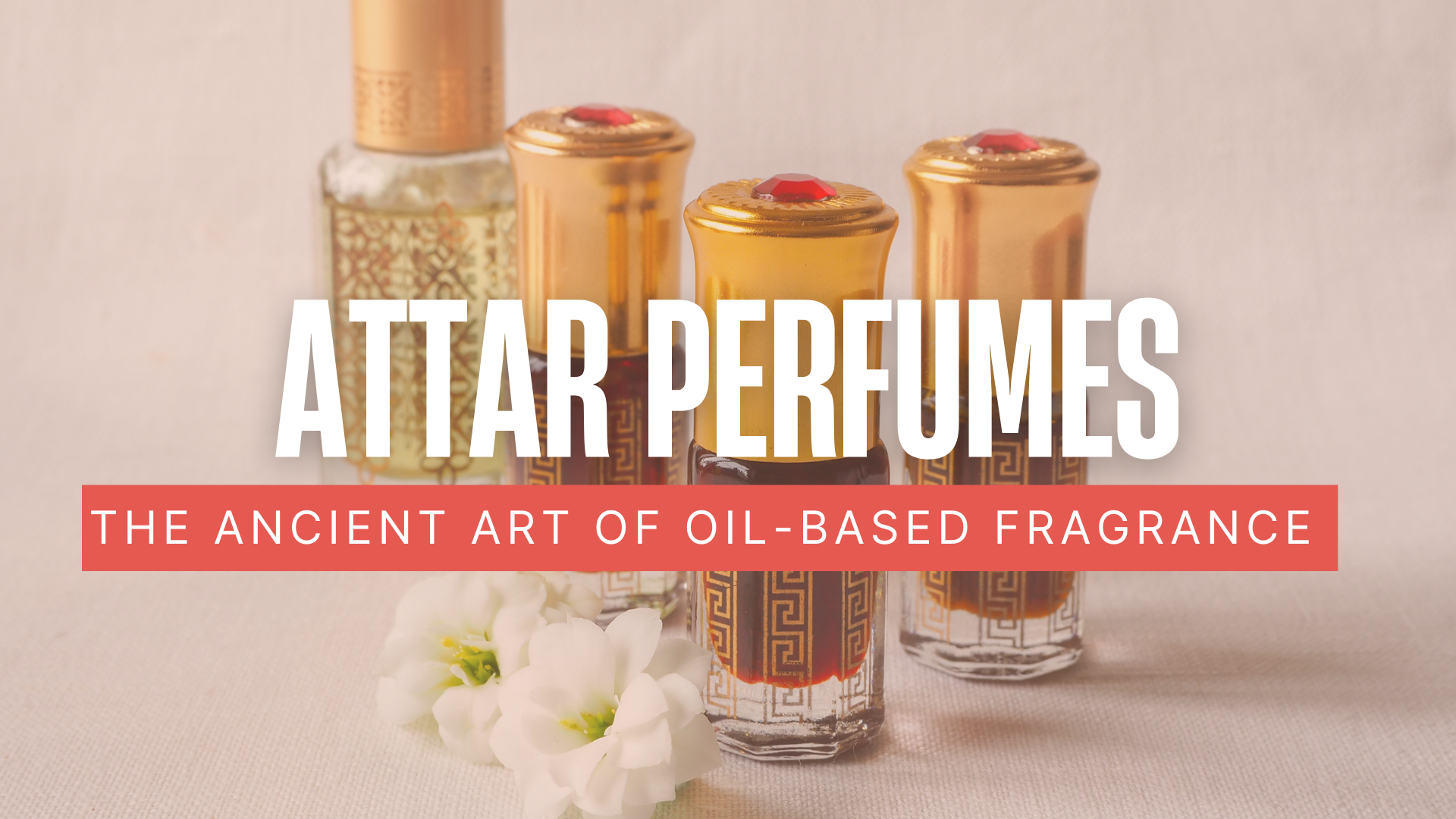
Long before alcohol-based perfumes existed, there was Attar. Also known as Ittar, these are traditional, non-alcoholic perfumes made from essential oils, botanical extracts, and a base of sandalwood or other carrier oils. They represent one of the oldest forms of perfumery, with a history deeply rooted in the Middle East and South Asia.
How Are Attars Made?
The traditional method, known as deg bhapka, is a labor-intensive hydro-distillation process. Flowers, herbs, or resins are soaked in water with a sandalwood oil base inside a copper still. The mixture is then slowly heated, and the fragrant steam is captured and condensed, infusing the sandalwood base with the pure essence of the raw materials.
Key Differences Between Attar and Eau de Parfum
| Feature | Attar Perfume | Attar Perfume |
| Base | Oil-based (e.g., Sandalwood) | Alcohol-based |
| Application | Roll-on or dabbed on skin | Sprayed |
| Sillage | Intimate, closer to the skin | Projects more into the air |
| Longevity | Extremely long-lasting on skin | Varies, but typically less than attar |
| Ingredients | Often natural, concentrated oils | Can be natural or synthetic |
Who Is The Bad Boy?
Why Choose an Attar?
Natural Connection: You are experiencing perfumery in its most ancient and pure form.
Longevity: Their oil base clings to the skin for 12+ hours, evolving slowly.
Intimacy: Attars create a personal scent bubble that is discovered only by those who come close.
Skin-Friendly: The absence of alcohol makes them less drying and a great option for sensitive skin.
- Read more here – Click