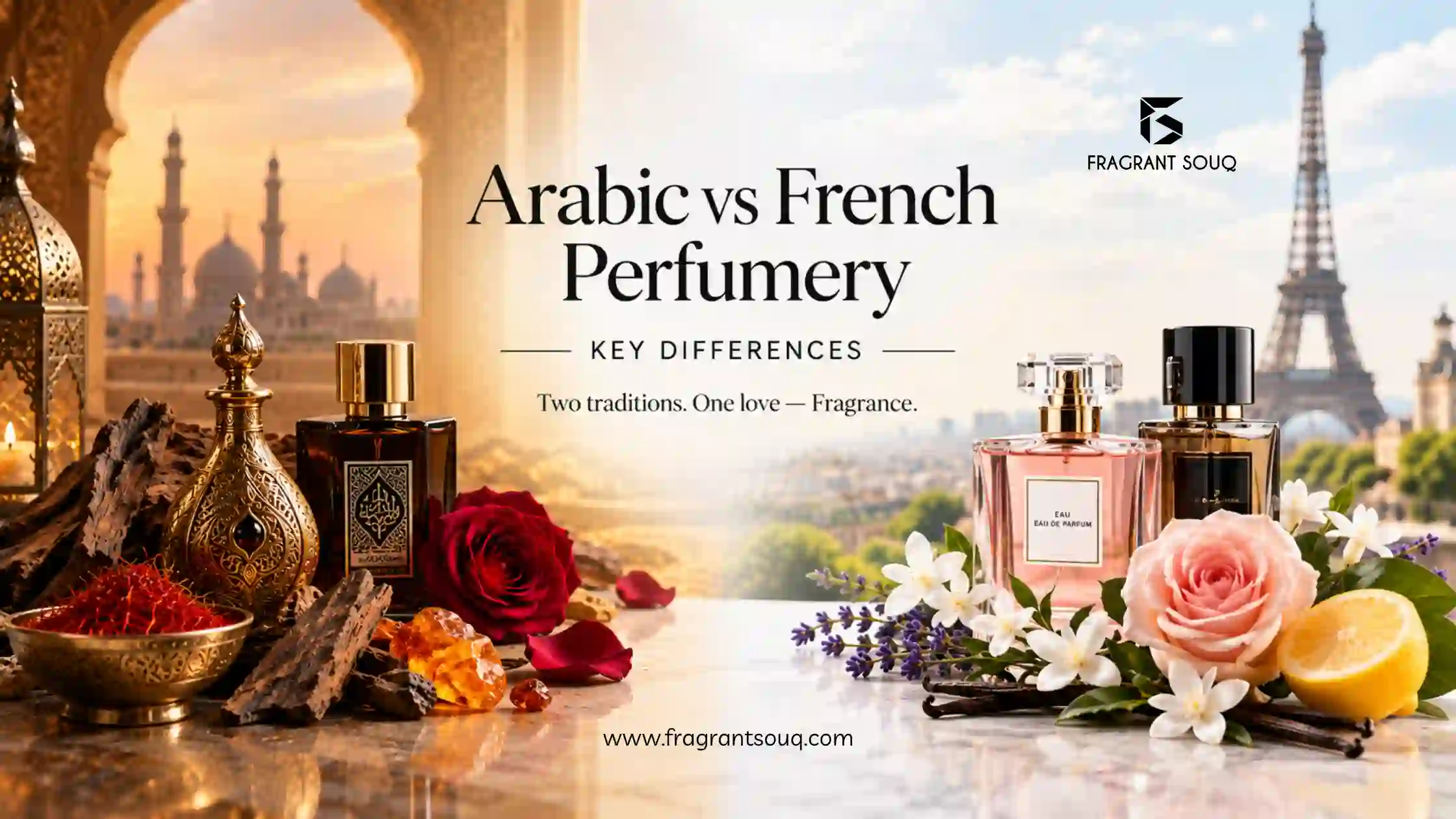
Arabic vs French perfumery is an interesting comparison for anyone exploring modern fragrance. While both traditions can include beautiful florals, woods, musk, amber and spices, they often approach fragrance in different ways.
Arabic perfumery is widely associated with oud, amber, musk, rose, saffron, incense and warm woods. French-style perfumery is often recognized for its structured compositions, fresh openings, floral hearts and carefully balanced woody or musky bases.
At Fragrant Souq, we believe understanding these differences makes it easier to discover a fragrance that matches your taste, occasion and lifestyle.
What Is Arabic Perfumery?
Arabic perfumery has deep connections with fragrance traditions across the Middle East. Oud, musk, rose, amber, saffron, incense and sandalwood are some of the ingredients commonly associated with the style.
Many Arabic fragrances focus on richness and depth. You may notice a warm oud accord, sweet amber, creamy musk or spicy saffron from the beginning. Attars and perfume oils are also an important part of the fragrance tradition.
Modern Arabic perfumes, however, are not limited to heavy oud fragrances. Today, you can find fresh citrus, fruity, floral, vanilla, gourmand and clean-musky Arabic perfumes as well.
What Is French-Style Perfumery?
French-style perfumery is strongly associated with composition, balance and the evolution of a fragrance on skin.
A perfume may begin with bright bergamot, lemon or other fresh notes, develop into a floral or aromatic heart, and finish with woods, vanilla, musk, patchouli or amber.
This does not mean French perfumes are always light. French perfume houses also create rich oud, amber, leather, vanilla and incense fragrances.
The important difference is often the way the ingredients are arranged and presented rather than the ingredients themselves.
Arabic vs French Perfumery: 5 Key Differences
1. Ingredients and Scent Character
Arabic perfumes often highlight ingredients such as:
- Oud
- Amber
- Musk
- Saffron
- Rose
- Incense
- Sandalwood
- Vanilla
- Spices
French-style perfumes commonly explore:
- Bergamot
- Lemon
- Rose
- Jasmine
- Iris
- Lavender
- Vetiver
- Patchouli
- Cedar
- Musk
- Vanilla
There is considerable overlap. A French perfume can feature oud and saffron, while an Arabic perfume can be bright, citrusy and floral.
2. Fragrance Structure
One useful way to understand Arabic vs French perfumery is to look at fragrance structure.
French-style compositions often emphasize a noticeable progression from opening to heart to base. Fresh notes can create the first impression before florals, woods, spices or musks become more prominent.
Arabic fragrances can also have a clear top, heart and base, but many compositions place stronger emphasis on rich base materials and a lasting scent trail.
This is why an oud, amber or musk fragrance can feel full and expressive even shortly after application.
3. Concentration and Longevity
Concentration is often discussed when comparing Arabic perfume vs French perfume, but it should not be treated as a simple rule.
Arabic fragrance culture includes concentrated perfume oils, attars and modern eau de parfum. French fragrance houses also produce everything from lighter eau de toilette to highly concentrated extrait de parfum.
Longevity depends on concentration, ingredients, skin chemistry, weather and application.
For US fragrance shoppers, this is especially useful to remember. A perfume that lasts beautifully on one person’s skin may perform differently on another person’s skin.
4. Oud, Rose, Amber and Musk
Some of the most recognizable Arabic perfume ingredients are oud, rose, amber and musk.
Oud can smell smoky, woody, earthy, leathery, sweet or animalic depending on the material and composition. Rose can become richer when combined with oud or saffron. Amber can create warmth, while musk can give a soft and sensual finish.
French perfumery also uses these ingredients. In fact, French perfumers have created compositions that combine traditional Middle Eastern materials with French-style fragrance construction.
This shows why the modern fragrance world is becoming increasingly interconnected.
5. When to Wear Them
Your choice can depend on the occasion.
Arabic-style fragrances may appeal to you if you enjoy:
- Rich oud
- Warm amber
- Spicy saffron
- Sweet vanilla
- Stronger fragrance presence
- Evening and special-occasion scents
French-style fragrances may appeal to you if you enjoy:
- Fresh citrus
- Elegant florals
- Clean musks
- Aromatic woods
- Balanced compositions
- Versatile everyday fragrances
These are preferences, not strict rules. A fresh Arabic perfume can work beautifully during the day, while a French perfume with oud or amber can be perfect for evening wear.
Arabic vs French Perfumery for US Fragrance Shoppers
For shoppers in the USA, exploring both styles can open up a much larger fragrance wardrobe.
If you usually wear fresh designer fragrances, try a modern Arabic perfume with citrus, musk or soft woods before moving into heavier oud.
If you already enjoy niche fragrances, an oud, saffron, amber or rose composition may offer a different direction.
At Fragrant Souq, fragrance lovers can explore authentic designer, niche and Arabic perfumes online and discover different fragrance styles in one place.
Which Style Should You Try?
There is no single answer for everyone.
Choose an Arabic-style fragrance if you are attracted to oud, amber, musk, saffron, rose, warmth and depth.
Explore French-style perfumery if you prefer citrus, florals, aromatic notes, clean musk and structured fragrance development.
You can also enjoy both. Many modern perfumes combine French-style composition with Arabic-inspired ingredients, creating fragrances that sit comfortably between the two traditions.
Final Thoughts
The real difference between Arabic vs French perfumery is not simply “strong versus light.” It is about fragrance materials, composition, cultural traditions, formats and the way a perfume is designed to develop.
Arabic perfumery can bring depth, warmth and memorable ingredients such as oud, amber, saffron and musk. French-style perfumery can offer structured compositions built around citrus, florals, woods and musks.
The best way to understand both is to experience them on skin.
FAQs
The main difference in Arabic vs French perfumery is often the fragrance style and composition. Arabic perfumery commonly highlights oud, amber, musk, saffron and rose, while French-style perfumery is often associated with structured compositions featuring citrus, florals, woods and musk. Fragrant Souq offers fragrance options across both styles.
In Arabic vs French perfumery, Arabic fragrances are often associated with richer and more noticeable compositions, but strength depends on the individual perfume. Concentration, ingredients, skin chemistry and application all affect performance. Fragrant Souq recommends checking the fragrance concentration and notes rather than judging only by its origin.
Yes. Arabic vs French perfumery is not a strict separation of ingredients. French perfumers also use oud, rose, amber, saffron and other materials associated with Middle Eastern fragrance. Fragrant Souq features fragrances that demonstrate how modern perfumery blends different traditions.
For Arabic vs French perfumery, everyday wear depends on your personal taste and the specific fragrance. Fresh citrus, floral and musk perfumes can be easy for daytime, while softer Arabic perfumes can also work beautifully every day. Fragrant Souq has options for different occasions and fragrance preferences.
Yes. In Arabic vs French perfumery, the important factor for US weather is choosing the right fragrance style for the climate. Fresh citrus, floral and lighter musk fragrances can suit warm weather, while richer oud, amber and vanilla can work well in cooler conditions. Fragrant Souq offers different fragrance profiles for different seasons.
Yes. Arabic vs French perfumery increasingly overlaps in modern fragrance. A perfume can combine French-style structure with oud, saffron, rose, amber or musk. Fragrant Souq makes it easier to explore this modern blend of fragrance traditions.